
‘We just sat down and started getting things happening…..It was mainly bass.’
Bruce Brown
Warner Brothers took the project to renowned Sydney producers Russell Dunlop and Bruce Brown, who went by the acronym BAD (Brown and Dunlop) and worked with Mental As Anything, Jon English, AC/DC, Midnight Oil, John Denver and Dragon. They’d never actually played the game, though.
‘We actually went out with a machine before we did the record and recorded all the sound effects of it and had a little fiddle around with it,’ says Brown. ‘But no, we weren’t players.’
Player One
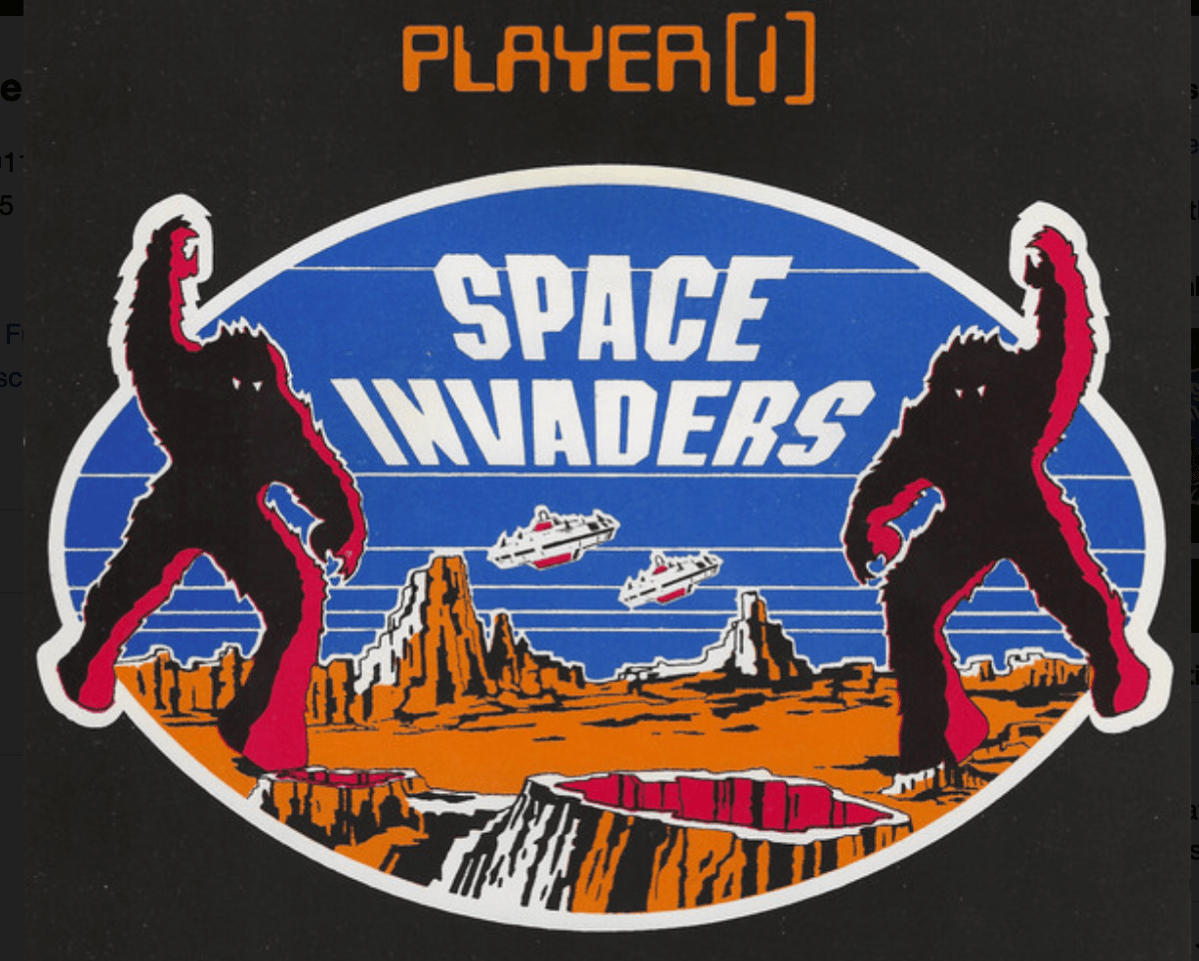
Brown and Dunlop decided to ditch their usual pseudonym in favour of something more video games-inspired: ‘We called it Player One because that was the first thing that came up on the Atari video game: Player One.
‘We just sat down and started getting things happening. Russell wrote the lyrics and we came up with the riffs and got the various drum things. It was mainly bass.’
Despite Brown and Dunlop’s lack of actual video gaming experience, when ‘Space Invaders’ hit Australian radio in late 1979 it proved popular straight away. It sold more than 120,000 copies and reached #3 on the national charts.
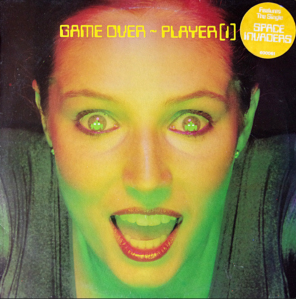
The record company was keen to cash in on the single’s success, so Dunlop and Brown rushed to put together an album. They recorded an LP in less than two weeks, but it never received a US release.
‘What we did was we put this thing together which was a little bit groovy and a little bit beyond the 14-year-olds,’ says Brown. ‘Consequently, when they sent the album to the States for their approval, they said, “This is horrible; this is not the same as the original record.”’
‘Because that’s what they wanted, an album full of the same type of thing. So we blew it there. It could have been our big money earner.’
‘Space Invaders’ didn’t disappear, though.
The Golden Days of Chicago House
“It wasn’t about who you were or what you looked like…..It was strictly about the music and dancing.”
Jesse Saunders
Meanwhile in Chicago, clubs like The Warehouse and The Playground were becoming incredibly popular with the local dance music crowd. DJ’s like Frankie Knuckles and Jesse Saunders were playing everything from Italo disco to early hip hop.
‘People were there to dance. I wouldn’t even say they cared about the social aspect,’ says Saunders. ‘They were diehard dancers. From the time they got there till the time they left, if they sat down once for five minutes that would have been a lot.
‘That’s what was unique about that period too, everybody came to dance. It wasn’t about who you were or what you looked like, bottle service, drinking, it wasn’t about any of that. It was strictly about the music and dancing.’
On and On
One weekend in 1982, while rummaging in a record store, Saunders pulled a 12’ by Mach called On and On which had sampled the Space Invaders bass part. It was a stroke of luck.
‘I just love that ‘Space Invaders’ bass line, I had never heard ‘Space Invaders’ before,’ says Saunders. ‘For me, just that whole groove of it was incredible. So that’s what became my signature record whenever I played anywhere.’
Saunders, however, lost the record. Wondering how he might fill the gap in his set, he hit upon the idea of making his own record, and sampling that beloved bass line to underpin it.
In December 1983 Jesse went into the studio to master his own creation, a track he called ‘On and On’, a nod to the beloved original 12″ he’d lost.
He gave away copies to fellow DJs Frankie Knuckles and the Hot Mix Five, and the track proved to be a banger. More importantly, it was the first house record on vinyl, and is credited with helping to launch an entire genre of dance music.
Not bad for a bass line inspired by a video game.
If you enjoyed this story please consider sharing it with your friends. Sign up to the Sonic Archaeology blog for regular stories on music history (particularly those with an Australian connection). You can also follow the Sonic Archaeology social channels here so you never miss another post.
This story was first published by ABC Radio National in 2015 as part of a series of music documentaries I co-produced called RareCollections.
 Sonic Archaeology