
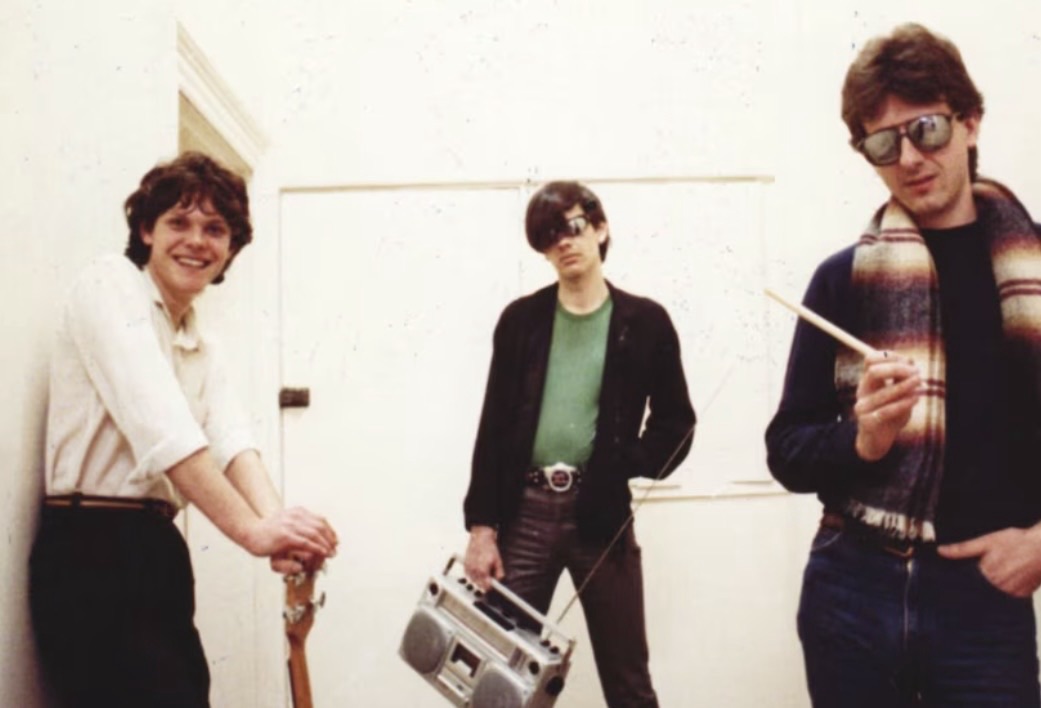
Ash Wednesday: I mean he was all dressed in skin-tight leather, he had a little leather hat on, he had black lipstick, he had black fingernails, his face was a pasty gothic white. Standing in six, seven-inch platform shoes, Kiss-style shoes, with his acoustic guitar, he looked like an outtake from David Bowie’s Space Oddity gone horribly wrong. And there he was, broad daylight, midday in the Adelaide Mall busking.
Jordie Kilby: That’s Ash Wednesday, and he’s reflecting on the day in 1976 when he met his future bandmate, Bodhan X.
Ash Wednesday: I walked up to him and just stared at him and smiled and said, “Hey man, what are you doing?” And he said, “Oh, you know, I’m going to be a superstar. People are just like sheep, they will follow.” And I said, “Wow, that’s great. We should get together.” And so we did, and within a matter of about a week or so, we played a gig, Adelaide University lunchtime concert, as Bodhan’s Silver Train, and that was Bodhan with his acoustic guitar and me and me with all my sort of cut-up tape loops and the sonic destruction sound effects. It was a pretty interesting gig, and we certainly got noticed.
Jordie Kilby: We’re talking with synth pioneer Ash Wednesday about a handful of recordings that he was involved with that really pushed the boundaries of Australian synth pop, electronic and new wave sounds that were going on in the early 80s. Now more recently Ash has become well known via his work with legendary German outfit Einstürzende Neubauten. And overseas he’s also appeared with artists like Nina Hagen. But the acts that we’re going to be playing and talking about for this episode include Models, Modern Jazz, The Metronomes, Karen Marks and this band, Jab.
Ash Wednesday: JAB was a three-piece group. J for Johnny Crash, A for Ash Wednesday, and B for the notorious Bodhan X. And we played around Adelaide as a group that consisted, although Johnny was a great drummer, we had a drum machine as well, and two ARP Odyssey synthesizers, analog synthesizers, with Bodhan providing the rhythm guitar and the vocals. So, Johnny and I both played synthesizer and worked around Bohdan’s three chord street songs. It was quite a daring group. We found out that we couldn’t get very many gigs at all in Adelaide, and I was told at that point of time that being different in Australia was not an advantage by a local booker. And that proved to be the case time and time again. But we were very headstrong, and we moved to Melbourne in around about 1978 and took a little entourage or a gang of people with us. Punk and New Wave was just starting to happen, and although we didn’t call ourselves a punk group, lots of other people did. And we started playing around some of the… Melbourne venues like the Tiger Lounge and later on the Crystal Ballroom. When I first met Bodhan busking in the Adelaide Mall, he said to me, “Look, it doesn’t matter what you do, it doesn’t matter whether people hate you or they love you, just as long as they notice you.” And that was pretty much our attitude. We were living on the edge and we were living from party to party to party, and we would find that some of the people at those parties we went to would be in other groups like the Boys Next Door and The Negatives and… The Spread. So we tended to sort of somehow gravitate together, the people that became significant figures in the New Wave scene tended to congregate together. And the Crystal Ballroom itself was a very… was a… perfect venue for people to be able to express themselves and to be seen. There was a spiral staircase leading upstairs and that was the perfect opportunity for fashion-conscious people to be voguing and to be seen. From that point of view, it was exciting from a point of view of fashion as much as the music. It was new. Breaking all the rules and it was, it was exciting. It was, and it was fun too at the same time.
Forming The Models
Jordie Kilby: When Jab vocalist Bodan X moved on in 1979, Ash, Johnny and bass player Mr. Pierre added guitarist Sean Kelly and the seminal new wave band Models was born. Within a year, Ash would move on to pursue other ideas, but, that original line-up of models established a strong live following very, very quickly. Now this line-up of the group never released anything commercially at the time, but there was a CD’s worth of recordings released in 2001 called Melbourne Models that included some desk recordings made by this original line-up.
Ash Wednesday: I was very glad to have that album released because I think the original line-up of The Models was an exceptional group. It’s just a shame that we didn’t manage to record that initial album. I think it would have been one of the great Australian pop albums.
Jordie Kilby: And that short but highly creative period resulted in Ash developing a songwriting partnership with Sean Kelly that began to really explore new styles and sounds.
Ash Wednesday: We were starting to write minimal lyrics in a….how would you describe it? A sort of… what would later be called post-punk framework, which I built on and developed, certainly the concept of the minimalism. Because I was… I was playing synthesizer and I was fascinated by the possibilities of synthesizer music at that point of time, it was really exciting. I was really interested in the possibilities of recording and performing songs which didn’t have the mandatory drum kits and the mandatory bass guitar and the mandatory guitar. I thought there was a brave new world waiting to happen there.
Jordie Kilby: So when Ash left Models, it was to pursue his own ideas. And not long after, he produced a solo single.
Love By Numbers
Ash Wednesday: I guess you would say my first single, Love By Numbers, is like a satire on a three-chord rock’n’roll song, with very minimal lyrics counting from 1 to 100. And the middle C part is, “ooh, ooh it must be love,” and that’s about as minimal as you can get. So there was a sense of humour running through that, which worked in a rock’n’roll context.
Karen Marks and Cold Cafe
Jordie Kilby: A kindred spirit at this time, and someone that Ash enjoyed working with was Karen Marks. Karen had been the manager for Jab and then Models, and she occasionally sang with other bands around town too. The two began collaborating, and not long after, the result was the stark and stunning Cold Cafe.
Ash Wednesday: Cold Cafe was a song that Karen wrote, actually. And I think it was very influenced in a lot of ways by my approach to minimalism, musically anyway. And I was very intent on not using drums and bass and using a synthesizer and a drum machine. And all the musicians around that point of time were telling me, “no, no, you can’t do that. You can’t have a snare sound like that. No, you can’t do it, you can’t do it.” And we just went ahead and did it, and a lot of people really liked it. Karen’s melancholy vocals just appealed to people. The simplicity and sparseness of the music just reinforced that immensely. It was something which was very new, hadn’t really been done before in an Australian record company context anyway. You might say it was the first example of Australian electro-pop.
The Metronomes
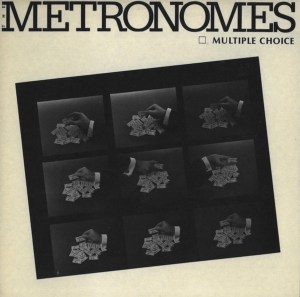
Ash Wednesday: Once leaving Models, I was involved in a number of different projects which were up and running concurrently. And one of those projects was a group called The Metronomes, which originally consisted of two people. One was Alistair Webb, who at the time was reviews editor for Duke Magazine. He was a rock and roll journalist, guitarist in a group called Street Life at that point of time. And the other person in the group was Andrew Picouleau, who eventually was the bass player in the Sacred Cowboys, but before then had played in a group called Secret Police and X-Ray-Z, who I suppose around the new wave period of time and the new wave category or post-punk, whatever you want to call it. Andrew and Alistair got together and decided that they wanted to record an independent single. But the problem with recording then independently was that it was expensive and the main expense was recording drums. You would spend hours and hours and hours of studio time marking up the drums just to basically get a reasonable drum sound. It didn’t really matter where you recorded, that was just standard protocol. And so, Andrew and Alistair decided, I know what we’ll do. Rather than use drums, let’s just use a metronome. You do one side of the single and I’ll do the other side. And that’s exactly what they did. Alistair had interviewed me from Models days, asked me to come in and play some synthesizer on his side. I was already good friends with Andrew anyway, so that was a pleasurable thing to do. And the single worked out really well. It was called Saturday Night, Sunday Morning. And then they asked me to join them. So the two-piece Metronomes became a three-piece recording-only group. What was interesting about the Metronomes was that even though, you know, before long we changed the metronome to an early drum machine and started to incorporate lots of synthesizers into the construction of the songs and it was an exciting recording environment. But what was interesting about The Metronomes, I think, was the fact that the music and the songs, even though it was quite experimental, certainly had a smile on its face. It wasn’t this sort of heads down, knob twiddling, we’re really serious, we’re into electronic music. It was, like I said, we always had a smile on our face. I suppose The Ballad of the Metronome is a good example in so far that it’s humorous lyric and integrating synthesizers and a very early drum machine which is almost like a step up from the metronome. It was almost like a programmable metronome. And I worked very hard trying to get interesting sounds out of it, running them through different effects and things like that, which is evident on The Ballad of the Metronome. Al did the main spoken vocal, but doing the backing vocal was indeed Karen Marks.
Modern Jazz
Jordie Kilby: Another interesting project that Ash was involved in around this time was the experimental outfit Modern Jazz.
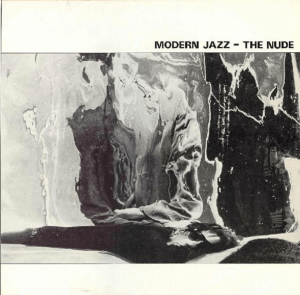
Ash Wednesday: After I left Models I became disenchanted with the idea that a live group could be a jukebox. You know, you’d practice your song until you perfected it and you came up with the perfect arrangement and you would play it, and you would play it and people would want to hear that arrangement, but It wasn’t going to get any better than that. It wasn’t going to become any different. And what I was looking for was ways that one could take a song and have it evolving. What I did was… set up a musical chairs situation from a vast pool of musicians that I worked with, that I workshopped. When I was living in Brunswick Street, Fitzroy, I had a rehearsal room, non-stop rehearsal room, and were just constantly inviting different musicians to come round and work on these songs. They were the sort of songs where you could play a selection of notes in one song, maybe you’d play C, E, G and A, and that would be the right notes. And the next song you could play D, F, G, B, and those would be the notes that would work all the time. So it was almost like a modal composition, so that anybody could walk in and if they worked to that plan, it didn’t matter who they were, whether they were a fantastic musician or someone who was just starting out, they could play the song. Their input meant that the song would be different every time. That’s what I was experimenting with, with Modern Jazz. So a concert would come up and I’d just pull names out of the hat. People that I’d been working with and say, “Okay, you’re playing tonight at the Jump Club.” And maybe I’d ring a guitarist up that I’d never even met and I’d say, Oh, would you like to come along and play tonight at the Jump Club? You know, I’d just sort of set up these situations which were certainly going to create difference and naivety was on equal par with experience as far as I was concerned. That was perhaps even more exciting to me. And what that meant was that there was no bottom line whatsoever. And the live performance would sort of alternate from being one of the most fantastic things you’ve ever seen in your life to being absolutely abysmal and disgusting and where people would just walk out en masse. So it was kind of like a really exciting experiment for me, but it also tended to sort of alienate me from people that might have grown up with the Models.
Jordie Kilby: Now while live performance was the main playground for Modern Jazz, they also did some recording. One number that’s really gained a following since it was recorded is Hairstyle Exploding.
Ash Wednesday: Well, that was just a stream of consciousness lyric. It was just one of those songs, the words just fall onto the page and there they are. And it takes about 15 seconds to write the song. Again, it took about 15 seconds to decide on the four modal notes that we used in that song. So, it evolved over a period of time. From what I was told, that song, Hairstyle Exploding, received quite a bit of dancehall play in Germany and a later Modern Jazz song called Radio Scream.
This interview was originally conducted with Ash Wednesday in 2014. You can see some of his recent releases, including AfterMATH – an amazing long form composition for the Melbourne Town Hall Grand Organ, Moog and electronics – on his Bandcamp page.
If you enjoyed this story please consider sharing it with a friend who might also like hearing more about Ash Wednesday’s music and career, or sign up to received future stories published on this blog. I try to put something new out every second week.
 Sonic Archaeology